
Choosing between a fresh milk and powdered milk coffee machine is mainly a question of drink quality versus total setup cost.
Both options can provide a reliable workplace coffee service and can use the same coffee brewer and beans. The main difference is the milk system. Fresh milk gives a more natural milk taste and better texture in drinks such as lattes and cappuccinos, while powdered milk provides a lower-cost route for businesses that want dependable coffee without the extra equipment needed for fresh milk.
This guide explains the practical differences between fresh milk and powdered milk coffee machines, including drink quality, equipment costs, cleaning, servicing and which option is likely to suit different workplaces.
Quick Answer
Fresh milk coffee machines are normally chosen where a business wants the best possible milk-based drink quality. The coffee itself can be comparable in either type of machine, but fresh milk gives better milk texture, more natural flavour and a more coffee-shop-style result in cappuccinos, lattes and flat whites.
Powdered milk machines are normally chosen where the business wants to control the overall cost of the coffee setup. A fresh milk machine needs a compatible milk fridge as well as the machine itself, so the complete package is usually more expensive.
Both options still require daily cleaning. Staff need to empty waste containers, clean drip trays, wipe down surfaces and clean mixing bowls where chocolate or other powdered ingredients are used. Fresh milk adds a daily milk-system sanitisation routine, normally taking around 15 to 20 minutes, but the main commercial difference is the higher cost of the fresh milk setup.
What is the main difference between fresh milk and powdered milk coffee machines?
The main difference is the milk system, rather than the coffee itself.
Fresh milk and powdered milk machines can use the same coffee brewer and the same coffee beans. This means the coffee base can be similar. The difference is most noticeable once milk is added, because the milk system affects flavour, texture, foam and the overall finish of the drink.
Fresh milk gives a more natural milk taste and allows different textures across the drinks menu. A latte can have smoother milk, a flat white can have a finer milk texture and a cappuccino can have a thicker layer of froth. This produces a result closer to what users expect from a coffee shop.
Powdered milk machines can still provide a dependable workplace coffee offer. However, the milk texture is more consistent across the menu and does not reproduce the same foam, mouthfeel or separation between coffee and milk that fresh milk can provide.
The practical choice is straightforward. Fresh milk is for businesses where better milk-based drinks are important enough to justify a higher-cost setup. Powdered milk is for businesses where the priority is to keep the total coffee investment lower.
What are the cost differences between fresh milk and powdered milk machines?
Fresh milk coffee machines usually cost more as a complete setup because they need additional equipment alongside the coffee machine itself.
The main difference is the milk fridge. A fresh milk machine needs space for a compatible fridge next to, underneath or close to the coffee machine, depending on the setup. As a guide, a suitable milk fridge will typically add around £600–£1,000 + VAT depending on the model selected. A powdered milk machine does not need a milk fridge, so the setup is normally simpler and lower cost.
The second major cost difference is ingredient cost. Fresh milk will usually cost more per drink than powdered milk, particularly on milk-based drinks such as lattes, cappuccinos and flat whites. The exact difference depends on the milk used, drink size, recipe settings and how many milk-based drinks are served each day.
The practical point is that fresh milk is normally the higher-cost route, but it gives a better result for milk-based drinks. Powdered milk is usually the lower-cost route and can still provide a reliable workplace coffee offer where budget is a bigger factor than achieving fresh milk texture and froth.
What are the practical day-to-day differences?
Both fresh milk and powdered milk coffee machines need a daily cleaning routine.
For either type of machine, staff need to empty waste containers, clean drip trays, wipe down surfaces and clean relevant internal parts. Where the machine serves hot chocolate or other powdered drinks, the mixing bowls also need cleaning to prevent powder build-up and blockages.
The main operational difference is the fresh milk system. Fresh milk machines require daily milk-system sanitisation, which normally adds around 15 to 20 minutes to the cleaning routine. The milk fridge also needs checking and topping up, and fresh milk needs to be managed properly to avoid unnecessary waste.
Powdered milk machines do not need a milk fridge or milk-system sanitisation. They still require daily cleaning and regular refilling, but the milk system itself is simpler to manage.
This should not be presented as though powdered milk machines need little or no care. Both options need a responsible daily routine. Fresh milk simply adds a specific milk-system task on top of normal machine cleaning.
What service and reliability issues can occur?
The most common issues with either type of machine are normally linked to cleaning routines not being completed properly rather than a mechanical fault with the machine itself.
With fresh milk machines, failure to complete daily milk-system sanitisation can allow milk residue to build up in the system. Over time, this can lead to blockages, affect drink quality and stop the milk system working properly until it has been cleaned and cleared.
With powdered milk machines, the main risk is the mixing bowl. If it is not cleaned properly, powder can build up and block the bowl. This is particularly relevant on machines serving hot chocolate or other powdered drinks.
Both types also need regular attention to drip trays, waste containers and overall machine hygiene. The most reliable option is normally the one whose daily cleaning routine the workplace is realistically prepared to carry out.
Does daily drink volume determine which option is better?
There is no fixed daily drink volume at which a workplace must choose fresh milk rather than powdered milk.
Both fresh milk and powdered milk machines are available in models rated for around 150 drinks per day, so either route can work in a busy workplace. Expected volume should guide the choice of machine model, ingredient capacity and coffee-station layout, but it does not determine whether fresh or powdered milk is the right route.
Fresh milk is chosen where the quality of milk-based drinks is the priority. Powdered milk is chosen where controlling the cost of the complete coffee setup is more important.
Which Livewell machines best represent each route?
For smaller workplaces with fewer than 100 people regularly on site, the G100 is the main comparison point because it is available in both powdered milk and fresh milk versions.
The G100 powdered milk machine is the lower-cost route. It is suitable for smaller sites that want a dependable coffee, tea and hot chocolate offer without the additional cost of a milk fridge and fresh milk system.
The G100 fresh milk machine is suitable for smaller sites that want better-quality milk-based drinks and are prepared to invest in the additional fresh milk equipment and daily milk-system sanitisation.
For larger workplaces with more than 100 people regularly on site, the G700 fresh milk machine is normally the more suitable fresh milk route. It should not simply be described as the “better” machine. It is more suitable where the site needs a larger-capacity fresh milk setup and wants to provide a stronger coffee offer for more users.
Livewell operating example: Tadcaster Grammar Sixth Form Centre
Tadcaster Grammar School Sixth Form Centre provides a useful operating example of how an upgraded fresh milk coffee offer can change customer use.
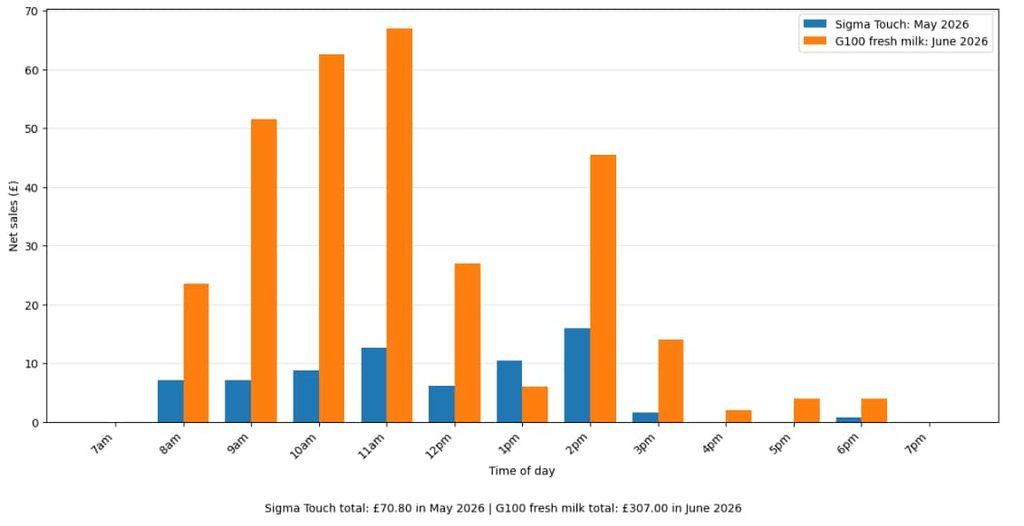
The site previously operated a Sigma Touch coffee machine. In the month beginning 1 May 2026, the machine recorded net sales of £70.80.
Livewell then installed a Gaggia G100 fresh milk coffee machine with a milk fridge, cashless payment device and bespoke branded cabinet. In the month beginning 1 June 2026, the new G100 recorded net sales of £307.
This is not a controlled machine-only comparison. The new offer included a fresh milk machine, milk fridge, cashless payment and a bespoke branded cabinet. Sales can also be affected by term dates, selling prices, product range, machine location and on-site promotion. The example should therefore show how the overall upgraded offer performed at this site, rather than claim that fresh milk alone created the increase.
A sixth form centre in Yorkshire
Which option is likely to suit your workplace?
Fresh milk is normally the right choice where drink quality is important enough to justify the higher equipment cost. This may include offices that want a stronger staff coffee benefit, customer-facing reception areas, meeting spaces, hospitality-style environments and education sites where the coffee offer is intended to be a visible part of the user experience.
Powdered milk is normally the right choice where the business wants a lower-cost coffee setup while still providing a reliable range of coffee, tea and hot chocolate. It is not a poor-quality or maintenance-free option. It is the more practical route where the business is less focused on premium milk texture and more focused on controlling total setup cost.
The decision should start with the experience the business wants to provide. It should then be tested against budget, available space, expected usage and whether the site can complete the daily cleaning routine properly.
Q&A
Fresh milk is normally better for milk-based drinks because it gives more natural milk flavour, smoother texture and better froth. The coffee itself can be similar in either machine because both can use the same coffee brewer and beans. The main difference is the milk, particularly in lattes, cappuccinos and flat whites.
Yes. Powdered milk machines still need daily cleaning. Staff need to empty waste containers, clean drip trays, wipe down surfaces and clean mixing bowls where powdered ingredients such as chocolate are used. Powdered milk machines simply do not need the additional milk-system sanitisation required by fresh milk machines.
Fresh milk machines need the same basic cleaning routine as powdered milk machines, plus daily milk-system sanitisation. This normally adds around 15 to 20 minutes to the daily routine. The site also needs to check the milk fridge, top up milk and manage the supply properly.
The coffee itself can be the same because both machine types can use the same brewer and beans. The main difference is the milk. Fresh milk changes the flavour, texture and froth of milk-based drinks, giving a result that feels closer to a coffee-shop drink.
Yes. Powdered milk machines are available in models designed for substantial daily drink volumes. The choice between fresh and powdered milk should be based mainly on drink-quality expectations and the cost of the full setup, rather than drink volume alone.
Yes. A fresh milk machine needs a compatible milk fridge to store and supply milk correctly during use. This is one of the main equipment and cost differences between a fresh milk and powdered milk setup.
Usually, yes. A fresh milk setup costs more because the machine itself is more expensive and it needs a compatible milk fridge. Current Livewell pricing should always be used when comparing equivalent fresh milk and powdered milk setups.
Either option can work in a smaller office. Fresh milk is normally better where drink quality is the priority and the business is comfortable with the higher setup cost. Powdered milk is often more suitable where keeping the overall coffee-station cost lower is more important.
Solutions
Products
Knowledge
Not sure whether fresh milk or powdered milk is the right choice for your workplace?
Use the Solution Wizard to explore suitable coffee options, or speak to Livewell about the drink quality, setup cost and daily responsibilities that best fit your site.